
Tendon Tears of the Foot and Ankle: Causes and Treatment Options

By Dr. Christopher Correa, DPM, FACFAS
Select Foot & Ankle Specialists, Cypress, TX
A sudden pop in the back of the ankle. Sharp pain along the outside of the foot. New weakness when pushing off the ground. These are the kinds of symptoms that can point to a tendon tear in the foot or ankle.
Some tendon injuries are mild partial tears that heal with protection and physical therapy. Others are complete ruptures that leave the foot or ankle unstable and may need surgical repair. The key is knowing what happened, which tendon is involved, and how quickly the injury needs treatment.
At Select Foot & Ankle Specialists in Cypress, TX, Dr. Christopher Correa evaluates acute tendon ruptures, chronic tendon degeneration, and injuries that have been mistaken for “just a sprain.” This article explains the most common tendon tears, how they are diagnosed, and what treatment may involve.
This content is for general education only and is not a substitute for a personal medical evaluation.

What a tendon does in the foot and ankle
Tendons connect muscles to bones. They help the foot and ankle move, push off, balance, and stay stable during walking, stairs, running, and quick changes in direction.
A tendon tear can happen in several ways:
A sudden injury, such as jumping, sprinting, tripping, or stepping off a curb
A twisting ankle injury that also damages the tendon
Long-term wear and degeneration that weakens the tendon over time
Repeated overload from sports, work, or daily activity
Foot structure issues, such as high arches or flat feet, that place extra stress on certain tendons
Certain medical factors or medications that may affect tendon health
Tendon Tears can be partial or complete. A partial tear means some tendon fibers remain connected. A complete rupture means the tendon has fully separated or torn through.
That difference matters because treatment changes based on the severity of the tear, the tendon involved, activity level, timing, and overall health.
The tendons most commonly torn in the foot and ankle
Several tendons can tear, but a few are especially common in podiatric practice.
The Achilles tendon often tears during a sudden push-off
The Achilles tendon connects the calf muscles to the heel bone. It is the strongest tendon in the body, and it plays a major role in walking, climbing stairs, jumping, and rising onto the toes.
A complete Achilles rupture often happens during a sudden eccentric load. That means the tendon is stretched while the calf muscle is contracting. Common examples include:
Sprinting or changing direction
Jumping during recreational sports
Missing a step
Stepping off a curb unexpectedly
Pushing off forcefully from a stopped position
Many patients describe a sharp pop or the feeling of being kicked in the back of the leg. Afterward, it may be hard or impossible to push off normally.
A podiatrist may perform a Thompson test, where the calf is gently squeezed while the foot is observed for movement. Lack of normal plantar flexion can strongly suggest an Achilles rupture.
Peroneal tendon tears cause pain along the outside of the ankle
The peroneus brevis and peroneus longus tendons run behind the outer ankle bone and along the outside of the foot. They help stabilize the ankle and support side-to-side motion.
Peroneal tendon tears are often linked to ankle sprains, repeated rolling of the ankle, high arches, or chronic instability. Pain may build slowly or follow a clear twisting injury.
Common symptoms include:
Pain behind or below the outer ankle bone
Swelling along the outside of the ankle
Weakness with side-to-side motion
Snapping or popping around the outer ankle
A feeling that the ankle may give way
When someone keeps “spraining” the same ankle, a tendon injury may be part of the problem. Peroneal tendon tear treatment Cypress TX patients receive may involve bracing, therapy, imaging, injections in select cases, or surgery when the tear is severe or the tendons are unstable.
The posterior tibial tendon can tear and lead to arch collapse
The posterior tibial tendon runs along the inside of the ankle and helps support the arch. When it becomes stretched, inflamed, or torn, the arch may gradually flatten.
This problem is sometimes called posterior tibial tendon dysfunction or progressive collapsing foot deformity. It can start as aching along the inside of the ankle and progress to pain, weakness, and visible changes in foot shape.
Signs may include:
Pain or swelling along the inner ankle
Trouble standing on one foot and rising onto the toes
A flattening arch
The front of the foot drifting outward
Fatigue with walking or standing
Early treatment can often slow progression. Once the tendon is severely damaged and the foot shape changes, treatment becomes more complex.
The anterior tibial tendon affects lifting the foot
The anterior tibial tendon runs across the front of the ankle and helps lift the foot upward. A tear may cause weakness when walking, especially during the swing phase of gait.
Symptoms can include:
A slapping sound when the foot hits the ground
Difficulty walking uphill or climbing stairs
Weakness lifting the foot
Pain or swelling at the front of the ankle or top of the foot
This tendon is less commonly torn than the Achilles or peroneal tendons, but a rupture can significantly affect walking.
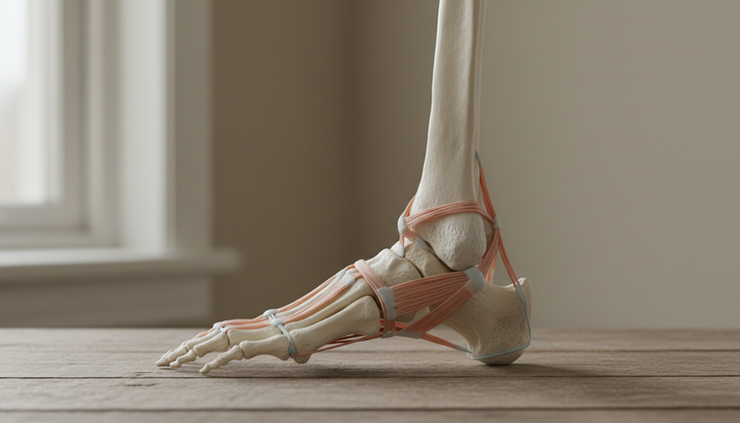
Symptoms that suggest a tendon tear
Not every tendon tear feels the same. Some are dramatic from the start. Others begin as nagging pain that gets worse over weeks or months.
A tendon tear may cause:
A pop, snap, or tearing feeling
Sudden sharp pain
Bruising or swelling
Weakness with walking or pushing off
Trouble rising onto the toes
Pain along a specific tendon path
Instability or repeated ankle rolling
A gap or defect that can be felt in the tendon
Changes in the arch or foot position
Pain that does not improve after a typical ankle sprain
A major warning sign is weakness that changes how the foot works. Pain alone can come from many causes. Pain plus sudden weakness deserves prompt evaluation.
Why tendon tears are sometimes missed
Foot and ankle tendon injuries can look like sprains, strains, or general soreness. This is especially true when walking is still possible.
For example, some people can still walk after an Achilles rupture by using other muscles to compensate. A peroneal tendon tear may be treated as a routine ankle sprain at first. Posterior tibial tendon injuries may be blamed on general arch pain until the foot shape starts to change.
A missed tendon tear can become harder to treat with time. The tendon edges may retract, scar tissue may form, and surrounding joints may become stiff or overloaded.
That does not mean every sore ankle is an emergency. It does mean persistent pain, swelling, weakness, or instability should not be ignored.
How a podiatrist diagnoses a tendon tear
Diagnosis starts with a careful history. How the injury happened often gives important clues. A sudden pop during a basketball game points in a different direction than months of inner ankle pain with a flattening arch.
The exam may include:
Checking swelling, bruising, and tender areas
Testing strength against resistance
Watching walking pattern
Comparing both feet and ankles
Testing ankle stability
Looking for changes in arch height or foot alignment
Performing tendon-specific tests, such as the Thompson test for Achilles rupture
Imaging may be needed to confirm the type and extent of injury.
X-rays help rule out bone injuries
X-rays do not show tendons directly, but they can identify fractures, bone spurs, alignment problems, arthritis, or avulsion injuries where a tendon pulls off a small piece of bone.
Ultrasound can show tendon motion in real time
Diagnostic ultrasound can help evaluate tendon tears, fluid around the tendon, and movement while the foot and ankle are positioned in different ways.
MRI gives detailed soft tissue information
MRI is often used when the diagnosis is uncertain or when surgery is being considered. It can show partial tears, complete ruptures, tendon degeneration, muscle changes, and related ligament or joint injuries.
Treatment depends on the tendon and the severity of the tear
There is no single treatment plan for every tendon tear. A partial peroneal tendon tear in an active walker may be treated differently than a complete Achilles rupture in a competitive athlete or a long-standing posterior tibial tendon tear with arch collapse.
The main goals are to:
Protect the tendon while it heals
Restore strength and motion
Reduce pain and swelling
Improve stability
Prevent repeat injury
Rebuild walking and activity tolerance
Nonsurgical treatment may help partial tears
Many partial tendon tears can be treated without surgery, especially when the tendon remains functional and the foot stays stable.
Nonsurgical care may include:
Rest from painful activity
Immobilization in a walking boot or cast
Bracing for added support
Anti-inflammatory measures when appropriate
Physical therapy
Gradual return to activity
Custom orthotics when foot structure contributes to overload
Physical therapy often focuses on restoring motion, improving strength, retraining balance, and correcting movement patterns that place stress on the tendon.
Surgery may be needed for complete ruptures or unstable tears
Surgery may be recommended when a tendon is completely ruptured, badly frayed, unstable, or unable to support normal function.
Depending on the tendon and injury, surgical treatment may involve:
Direct tendon repair
Removing damaged tendon tissue
Tubularizing or reshaping a split tendon
Reattaching a tendon to bone
Tendon transfer
Repairing associated ligaments
Correcting bone alignment when structure contributes to the tear
For a complete Achilles rupture, treatment may be surgical or nonsurgical depending on the patient, the tear pattern, timing, health factors, and functional goals. The decision should be made after a direct exam and discussion of risks, benefits, and recovery expectations.
For those searching for tendon tear foot ankle Cypress TX, an in-person evaluation is the best way to understand whether the injury is mild, severe, acute, or chronic.
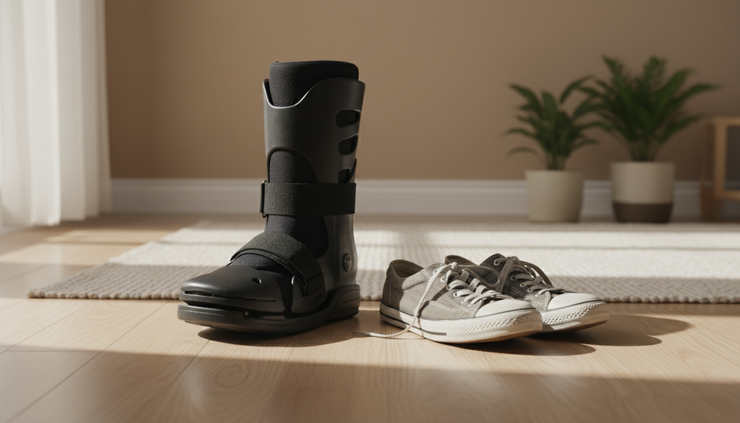
What recovery usually involves
Recovery from a tendon tear is a process. The timeline depends on the tendon, tear severity, treatment type, and how long the injury has been present.
Many treatment plans move through stages:
Protection
The tendon is protected with a boot, cast, brace, or limited weight-bearing.
Controlled motion
Gentle movement begins when safe to reduce stiffness and maintain mobility.
Strengthening
Therapy focuses on rebuilding the muscle-tendon unit and supporting structures.
Balance and gait work
The goal is to restore normal walking mechanics and reduce compensation.
Return to activity
Activity increases gradually. This may include walking, gym exercise, work demands, sports, or daily errands.
Rushing the process can raise the risk of re-injury. On the other hand, staying immobilized too long can lead to weakness and stiffness. A guided plan helps balance protection with progress.
When to seek prompt care
Some tendon injuries need faster attention than others. Seek prompt evaluation if any of the following happen:
A sudden pop followed by pain and weakness
Inability to push off or stand on tiptoe
Rapid swelling or bruising
A visible change in foot shape
New foot drop or trouble lifting the foot
Pain that does not improve after an ankle sprain
Repeated ankle rolling or chronic instability
A suspected rupture after sports, a fall, or a missed step
If the foot is cold, numb, severely deformed, or you cannot bear weight after an injury, urgent care or emergency evaluation may be needed.
How to lower the risk of another tendon injury
Not all tendon tears can be prevented, but certain habits can reduce risk.
Helpful steps include:
Build calf, ankle, and foot strength gradually
Warm up before higher-intensity exercise
Avoid sudden jumps in mileage or workout intensity
Replace worn shoes
Use braces or orthotics if instability or foot structure requires support
Treat ankle sprains fully instead of returning too soon
Address persistent tendon pain before it becomes a rupture
A slow increase in activity is especially useful after a break from exercise. Tendons adapt, but they need time.
The takeaway on foot and ankle tendon tears
A tendon tear is not always obvious at first. It may feel like a pop and sudden weakness, or it may start as nagging pain that slowly changes how the foot moves.
The right treatment starts with the right diagnosis. Achilles, peroneal, posterior tibial, and anterior tibial tendon injuries each behave differently, and each requires a plan based on the specific tear.
If there is sudden weakness, repeated ankle instability, arch collapse, or pain that is not improving, do not assume it is only a sprain. A foot and ankle specialist can identify the injured tendon, explain the options, and help choose the safest path back to walking, work, exercise, and daily life.


Comments